Gauge measurement of a steel profile on the lineVision King measuring steel gauge on the lineby integratingandComputer VisionArtificial IntelligenceEnhance qualityStandarts

Vision King – Steel Gauge Check

Technology Description

The main objective is to identify defects and imperfections on the edge of the metal profile, such as:
Conformity
to Format

Irregularity detected along the steel tube

Size
Margins

Irregularity detected along the steel tube

Thickness and
Parallelism

Deformation detected on the steel tube

Cracks in
Radii

Thickness deviation measured on the steel tube

Deformations and
Mechanical Marks

Deformation detected on the steel tube

Computer vision applied to gauge measurement has become an essential solution to ensure quality in hot or cold metal profile manufacturing processes. Vision King uses cameras and image processing algorithms to detect defects, irregularities, and specific characteristics of the profile edge that are difficult to identify with the naked eye.
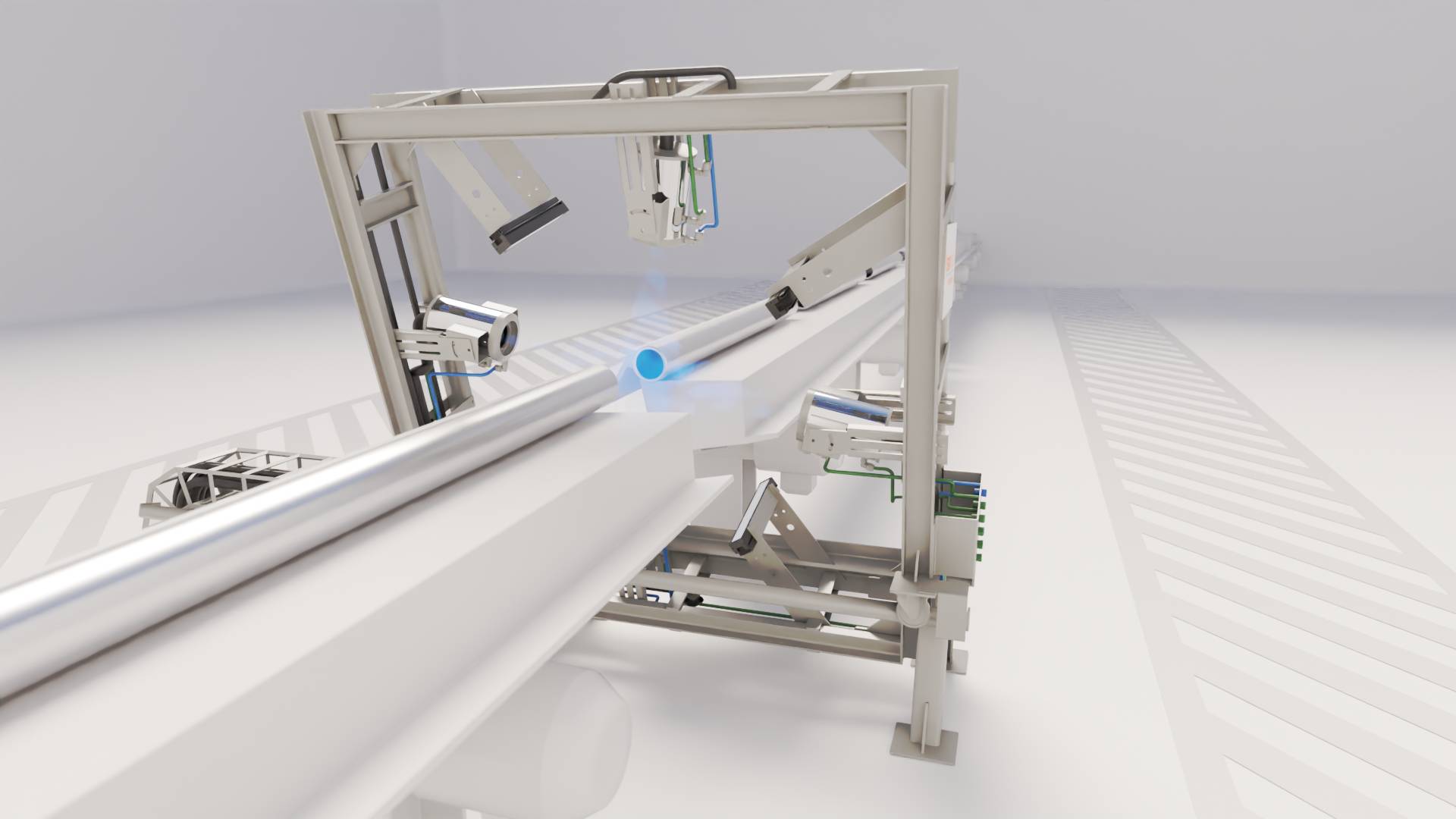
Vision King inspection frame over the steel tube conveyor
Steel tubes running through the inspection station

Technologies and Techniques Used in Inspection
Cameras and
Sensors

Image
Processing
Artificial
Intelligence

Real-Time
Systems

Advantages

  • Safety and Real-Time Capability:

    Computer vision technology can operate in environments too hazardous for people. Even at high temperatures.

  • Precision and Consistency:

    Computer vision technology is more precise and consistent than manual inspection, reducing human errors and increasing efficiency.

  • High Speed:

    Real-time analysis allows for immediate defect detection, without stopping the production line.

  • Increased Quality:

    The total and immediate analysis of production by the system allows for the detection of problems with machinery, dies, or even mechanized handling, preventing defect propagation throughout the batch and even anticipating equipment corrections.

  • Analysis and Reporting:

    Computer vision systems can collect data over time, allowing for the identification of trends and root causes of defects, in addition to optimizing processes.

  • Cost Reduction:

    The technology decreases the amount of scrap generated in all phases of the production process, from hot to cold. Special attention is paid to energy efficiency by preventing foreign materials from mixing with the raw materials to be melted.